Tuesday, July 3, 2012

Epic Adventure in Scotland Day 5: Berwick-on-Tweed to Stratford-upon-Avon

We woke up in Berwick and made our way for Hadrian’s Wall; specifically, we went to Housestead’s Roman Fort, near Hexham.  In 122 AD the new Roman Emperor, Hadrian, toured the empire and decided, for various reasons that I will not go into here, to limit the expansion of the empire, thereby allowing for greater control and growth within the empire.  The result in Britain was Hadrian’s Wall, a 73-mile long stone and turf wall that extends the width of Britain’s narrowest stretch, starting near Newcastle-upon-Tyne and going west.

The wall is studded with various forts spaced out across the entire length of the wall.  Housestead is the best preserved of the forts, and once housed not only the 800 soldiers of the legion, but financially supported a village that sprung up around the fort.  The fort lasted until the withdrawal of Rome from Britain in 411 AD, when it was no longer run by an organized military system and fell into disrepair. 
After leaving the fort, Jamie and I headed home to Stratford-upon-Avon, in time for rehearsal.  It was a quick five-hour drive.

[The remains of the Commander of the fort's house.  He was lucky, he had under floor heating, everyone else had to deal with the cold of the northern English weather.]

[This is the under the floor heating I was speaking of.  Flooring would be placed on top of these pillars, and a fire would blow hot air in the open space beneath the floor, warming the entire house.]

[Jamie getting in touch with her inner Pict.  The Picts were a Scottish tribe first mentioned in 297 AD.  Very little in known about them, but they made raids against the wall.]

[The wall as it extends to the east, towards Newcastle-upon-Tyne.  I hope to walk the whole wall some day (it is isn't that long, compared to the Camino), as these people are doing.]

[The remains of one of the barracks.  Two have been unearthed so far.]


Wednesday, May 9, 2012

Saag Aloo...Also known as Indian cooking

I had lunch with my friend yesterday, and she gave me a very good recipe for Saag Aloo, or spinach (saag) and potatoes (aloo) cooked Indian style.


First, heat a pan with a bit of oil.  Then add ginger paste (in the big bowl in this picture), garlic paste (next to the bowl, on the plate) and a bunch of spices...fenugreek seeds, fennel seeds, black mustard seeds, cardamon pods, cumin and whole coriander seeds.  Cook in the oil until the paste turns light brown.


Meanwhile, chop up potatoes and fresh spinach.


Add the potatoes to the pan, and cook for 5-8 minutes, stirring occasionally.


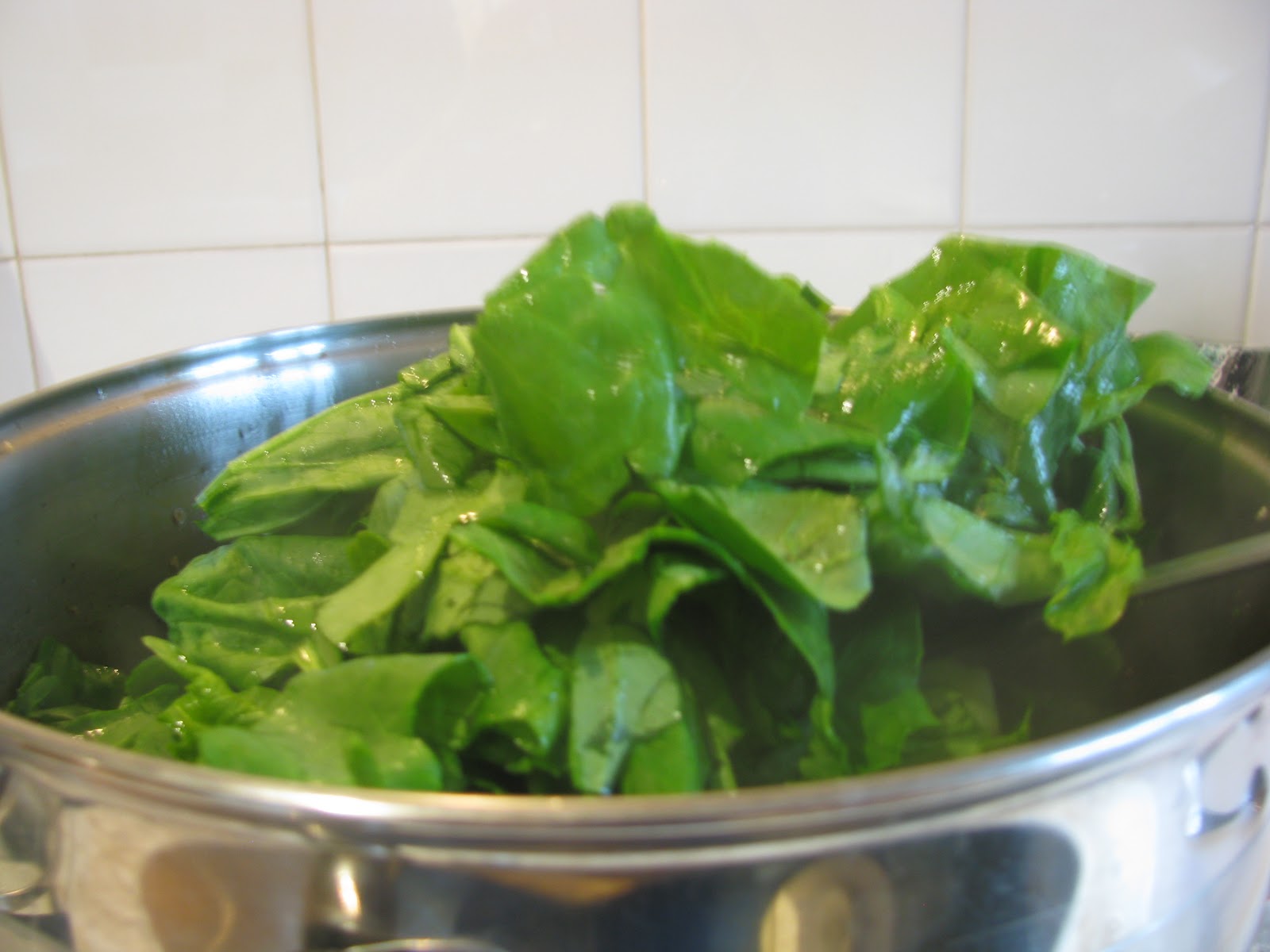
Add the spinach.


And some water.


Let cook 10 minutes, then cover and simmer until the liquid is gone and potatoes are cooked.  Add a sprinkling of madras curry powder, and stir.


ENJOY!

Sunday, May 6, 2012

Three Random Updates

Here are three random bits: an update on my garden, my new babies (old bits of paper, really) and my cooking project of the day (Vegetarian French Onion Soup).

GARDEN UPDATE

Do not let the sun in these first pictures fool you, it lasted for only a few hours this morning, and is the first we have had in about a week.  


My seeds have, mostly, grown!  I now have tomatoes, cucumbers and melons starting inside.  The weather here is still crap, so I can't put them outside yet, but hopefully in the next two weeks I will be able to.


My strawberries are coming along nicely; they seem to be the only thing not deterred by the weather.


My lettuce, arugula, cress and spinach.  The arugula and cress have started to bolt because they are too close together.  


My onions (shorter, in the front) and garlic (taller, in the back).  I hope they actually grow.  I have had problems with these growing in the past and not actually forming bulbs.  They should both be ready in about 2-3 months.


My peas, which should be much bigger by now.  The weather is so crappy that even the pea, which normally like the cooler weather, are stunted now.  It didn't help that our neighbors broke the fence they are suppose to grow up, smashing a few in the process.  I might start some new peas indoors, and transplant them outside in order to get a bigger harvest.

MY NEW BABIES


This is a print of Bath Abbey from the book Monasticum Anglorum, printed in 1718 (the original book is earlier, but this is from a reprinting).  I bought it for 1 pound ($1.63) in January.  I had it framed and love it!


At the same book fair where I bought the Bath Abbey print I also bought this.  Introducing my manuscript.  It is a page from a French book of hours (old-timey book of prayers).  It is illuminated (meaning the words are fancy, including being gold leafed....I am going to pretend that 'gold leafed' is a real phrase) and from the mid 15th century.  This is just one side, which is the beginning of a litany, or list of saints.

VEGETARIAN FRENCH ONION SOUP

I have wanted to try French Onion Soup for a very long time, but since I am a vegetarian and the stock is traditionally beef broth I have been unable to pursue my culinary curiosity.  I finally looked up a veggie recipe and decided to make it today.


I was out of veggie stock, but had a bunch of veggies that would otherwise not have been used, so I decided to make my own.  This is just a pot water with: an onion, shallots, carrots, celery, potatoes, purple sprouting broccoli, herbs and a leek...oh and spinach.  I let it boil for a few hours and was left with.........


THIS!  Introducing my very first, home-made veggie stock.  I know the picture is upside down, but for some reason when I transfer the image to the blog it rotates it.


Now all that I had to do was sweat 2 pounds of onions.  In case you have never seen that much chopped onion....it is roughly the size of a brontosaurus egg.


Now add the stock, garlic and a bit of sugar and simmer for 20 minutes.  Then put in a bowl, top with slices of French bread, slices of Gruyere cheese (I used an Irish cheese that is similar) and broil until the cheese has melted.  


And enjoy!!!

That is all for now.  My best friend will be here in a few weeks, so there should be more updates then.


Sunday, April 22, 2012

Shakespeare's Birthday Celebration 2012, Stratford-upon-Avon

Every year Stratford-upon-Avon had a parade to mark the birthday of Shakespeare.  The Head Boy (yes they really do exist outside of Harry Potter world) from the King Edward School knocks on the door of Shakespeare's birthplace, where a man and woman dressed as Shakespeare and Anne Hathaway give him a quill.  He then leads the parade as it goes to the market cross (where a series of flags are unraveled to represent the different countries and organizations at the parade).  From here the parade continues down High Street, Chapel Street and then Church Street before it turns onto Old Town, which leads to the church.  It might sound long, but in England many streets change their name at every intersection, so it is actually only about three blocks.  The parade ends at Holy Trinity Church, where Shakespeare is buried.  The Head Boy replaces the quill in the funeral bust of Shakespeare and hundreds of flowers are then laid on Shakespeare's grave. 


My friend Robert and David sitting in front of the Shakespeare Institute, waiting for the parade to begin


The Shakespeare Institute delegation in the parade.  One student from each MA program walks in the parade from the Birthplace to Shakespeare's grave.  The man in the red robe in the back in Dr Michael Dobson, the new director of the Institute.    


Me and the sign to the institute.  Betwixt my teeth is the rose I laid on Shakespeare's grave.


Each country is invited to send delegates to march in the parade.  This year and last year China had the largest turn out.  Their dragon was a crowd favorite.


They also had Chinese Opera actors, who jumped along the way to the church.


Morris dancers!


My flower for Shakespeare and rosemary from the Institute garden, with the spire of the church in the background.  Rosemary is traditionally associated with memory.  In Hamlet, after she looses her marbles, Ophelia starts throwing bits of foliage about and says 'There's rosemary, that's for remembrance.'  There is a monument to Shakespeare in Southwark Cathedral in London that shows him laying down, reclining on his elbow.  There is always a sprig of rosemary in his hand.  Interestingly, to geeks like me, Shakespeare's brother, Edmund, is buried in Southwark Cathedral; the contemporary playwrights of Shakespeare who collaborated on many plays, Beaumont and Fletcher, are also buried in the cathedral.  Edmund was an actor who moved to London sometime in the 1590s.      


DRAGON!  


Once you enter the church through the west doors you walk to the chancel, where the grave of Shakespeare and those of certain members of his family are located.  You hand your flowers to the people in the white surplices and then leave through a door that is only used at this time of year.  


DUCKS IN FRONT OF THE ROYAL SHAKESPEARE COMPANY THEATRES!!!  After the Parade was over my friends and I decided to walk around town and take in the events planned for the day.   

We took a row boat ride on the river avon. I have wanted to do this for over a year and finally did!  Jamie looked terrified when it was her turn to row.


Tanya and I look amazing...as usual.


Our friends in their boat.  We had planned to race them, the brits versus the the Americans, but soon abandoned that idea once we realized how hard it was to steer.  


Holy Trinity Church from the river.


Tanya made rowing look so fabulous...until she fell backwards.  I laughed until it happened to me soon after.


Me on my bum in the boat.  Well played physics.  Well played.


My friend emma had to spend the day working at the RSC.  She promptly stickered me when I walked by.


Normally King Lear is sad in this picture.  The simple transition from a sad to an excited face completely changes the meaning of the show!


Now I just look confused.


This was a Brazilian Samba group that performed in front of the bridge.  Good music.


My friend Marshall was working with a group of teenagers who put on an abbreviated version of Romeo and Juliet that started in front of the RSC, moved to the park (where this was taken) and ended in Holy Trinity Church.


The grave covered with flowers.  


Under this pile of flowers is the grave Shakespeare.  The entire chancel smelled amazing with the hundreds of fresh flowers in the room.

Kenilworth Castle


Even though I have lived in Warwickshire for about a year and a half, I have not been to Kenilworth Castle until about a week ago.  Kenilworth is a town about 40 minutes by bus from Stratford-upon-Avon that is dominated by the remains of famous castle.  The picture above is me celebrating finally using my English Heritage membership enough that it has now paid for itself!  HUZZAH!  The building of the castle began by Geoffrey de Clinton in the 1120's.  There are three main areas buildings: the Norman Keep (built mostly de Clinton, but changed later by King john and others), John of Gaunt's Palace and the palace built by Leicester in the 1560s and 1570s to accommodate the visits of Elizabeth I (who he was trying to convince to marry him).


This is one side of the Norman Keep.  The large windows are later additions, as building practices in the time with was built meant that large windows were very difficult to make without affecting the stability of the walls.  Also, larger windows were more dangerous: projectiles could be thrown in and the walls are weaker.  The larger openings were added in a time when the threat of siege or direct attack on the castle was no longer such a problem.  The area around the castle was flooded, creating a lake that surrounded the castle for hundred's of years.  It is believed by some that in the hall in this building is where King Edward II (1284-1327) was forced to abdicate the throne for his son, Edward III.  In reality his wife, Queen Isabella, conspired with a Lord (Mortimer) to start a civil war.  Edward was not a very good king according to many historians.  He was gay (most likely) and was in love with a man named Gaveston, who the Barons that revolted had killed.  Christopher Marlowe wrote a play about Edward II (called Edward II) that I would love to produce in the hall in this keep.  Edward was taken to Berkeley Castle, where he  was killed by having a red hot poker shoved up his bum.  It is said that people in the surrounding village of Berkeley could hear his screams.  Edward III later had Mortimer executed, but only after he and Isabella effectively ran the country while Edward III was  boy.


John of Gaunt, First Duke of Lancaster (1340-1399) was the third surviving son of Edward III and Phillipa of Hainault. John made renovations to the existing Norman building and built his own palace next to it.  By john's time architectural techniques and tastes and both advanced from Geoffrey de Clinton's time.  His palace was a enormous and beautiful (he was, after all, a royal).  Above is the window of the great hall he built in the palace.


 This is the undercroft of the great hall, the basement essentially.  It was here that food, wine and other goods were stored.  The first floor (which no longer exists) is the floor of the hall.  Some believe that it was in this hall in 1414 (or 1415, I forget which) that the French Dauphin's messenger ('Dauphin' is the French word for Dolphin, and is the name for the next in line to the French throne) presented Henry V with tennis balls in response to his claim to area of France. The tennis balls were a reference to the youth of Henry.  This event led to Henry's invasion of France, which ended with the Battle of Agincourt, one of England's most important victories over the French.


This is my friend Jamie standing near the undercroft of the hall.  


This is the back of Gaunt's hall.  behind me is the wall that surrounds the castle.  This area is now a green lawn that kids play in when they visit the castle, it was once the site of hundreds of houses and other dwellings.  


This is the front of the palace built and expanded by Robert Dudley,  First Earl of Leicester for the three visits of Elizabeth I to the castle in the 1560s and 1570s.  The large windows were very rare in the time period, and were seen as a luxury and display of the wealth and power of Leicester.  The apartments built for Elizabeth were in this building.  You can see in the background, on the right, the palace of John of Gaunt.


The interior of Leicester's tower.  The holes in the wall are fireplaces.


Leicester's palace viewed from the place of the former kitchen.  Elizabeth's 'long visit' (which lasted three weeks) included dozens of entertainments, most of which involved the theme of love and marriage.  On one night hundreds of fireworks were set off.  The display lasted so long that some people were forced to go to bed before it was over.


In order to impress and accommodate Elizabeth Leicester had a privy (private) garden built next to the Norman Keep.  


In the center is a large fountain.  The boxy-looking thing in the background is an aviary that houses a bunch of different birds.  The garden today was recreated from accounts of what the original looked like.   


This is a shot of the aviary.  The pheasant on the outside was a wild one that was very interested in the one inside.  He was there, walking on the ledge, for about twenty minuted until we left.


Kenilworth also had a large abbey prior to the reformation.  Not much is left of it today.  This is the old gate house, right next to a modern play ground.


This is another view of the gatehouse.


The largest building left of the abbey is this church, the Priory Church of St Mary.  It is a Norman building that is still used as the local parish church.